How to set up a cryptocurrency wallet?
Ready to get started? Here's how to set up a cryptocurrency wallet:
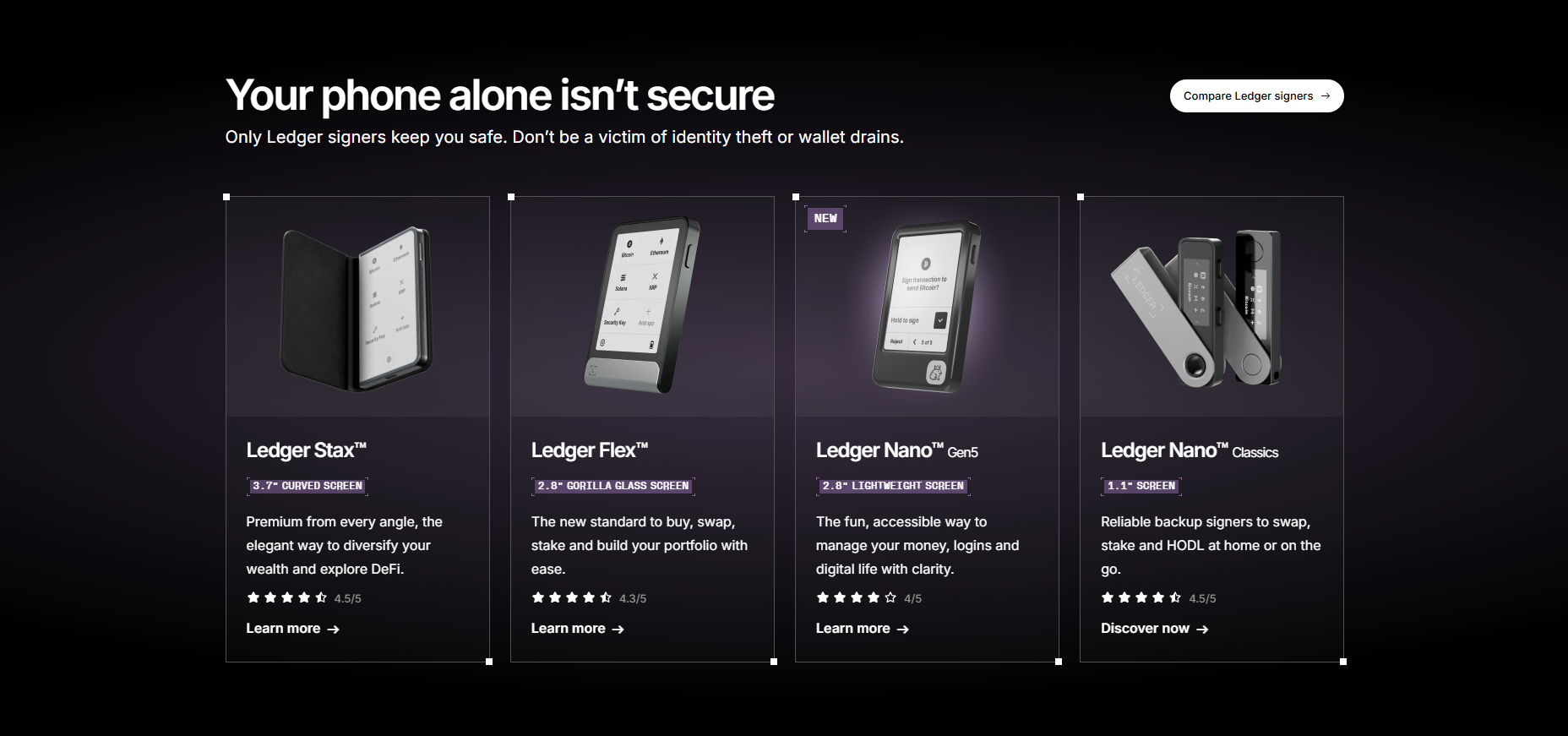
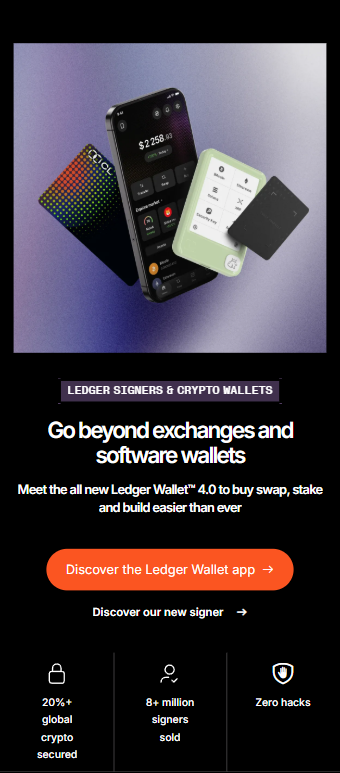
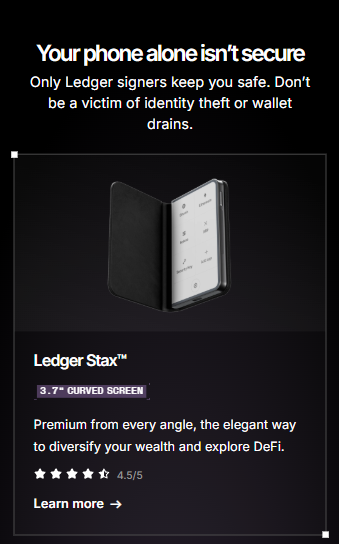
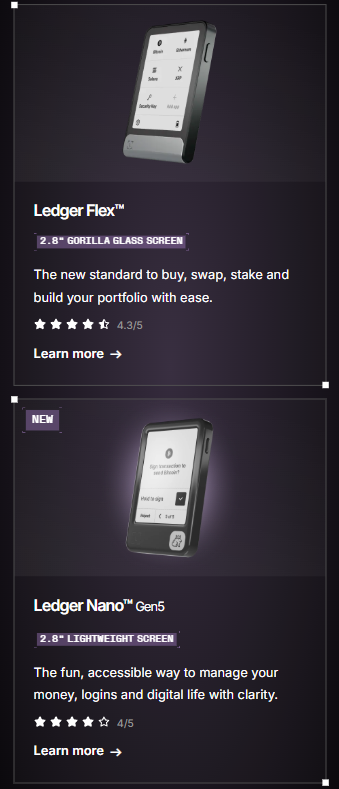
Purchase a Ledger hardware wallet. Store your private keys in a secure offline environment, ensuring peace of mind and complete control over your assets. All Ledger cryptocurrency wallets are equipped with the industry-leading Secure Element chip and Ledger's proprietary operating system, which protects your cryptocurrencies and NFTs against advanced cyberattacks.
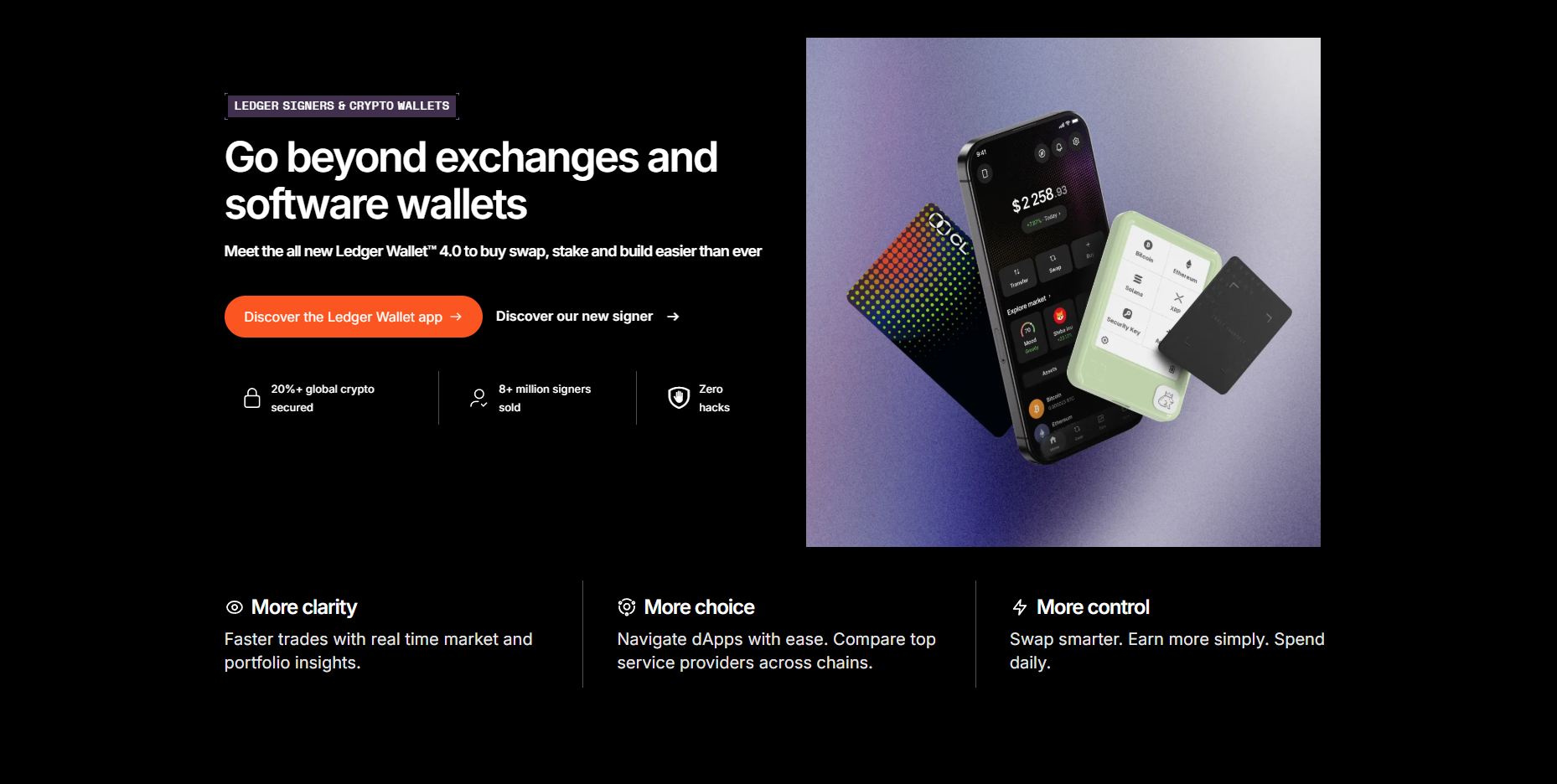
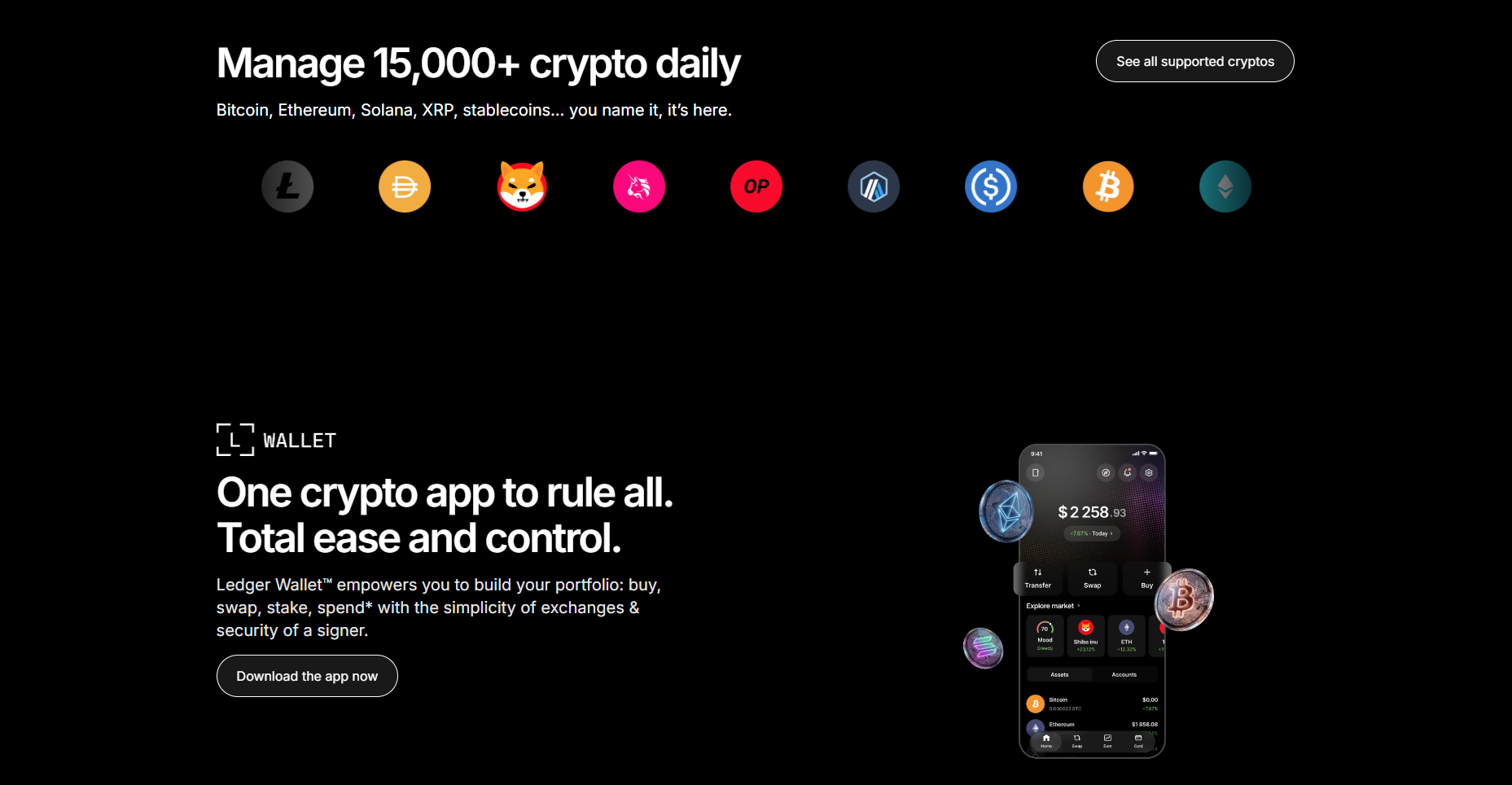
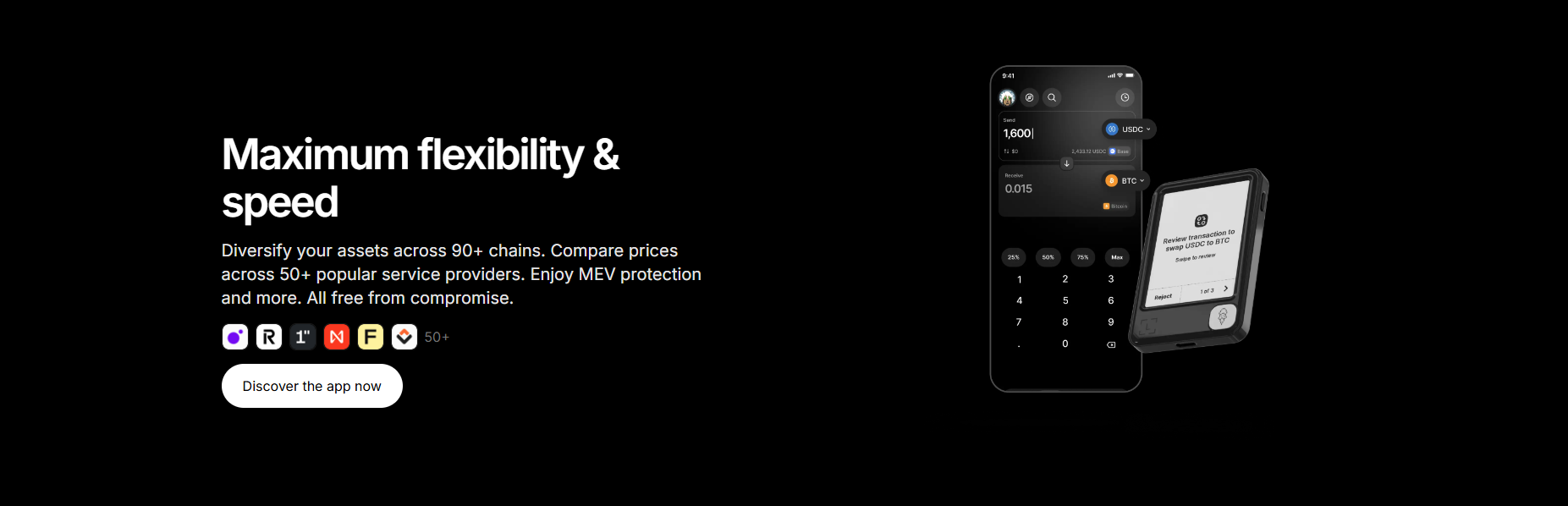
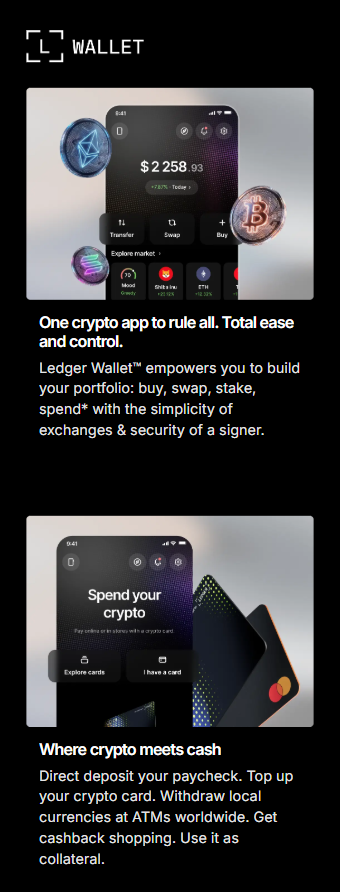
Connect your Ledger cryptocurrency wallet to the Ledger Wallet app to easily manage your cryptocurrencies, track your portfolio, and securely use a wide range of decentralized applications (dApps) and Web3 services. All in one place!
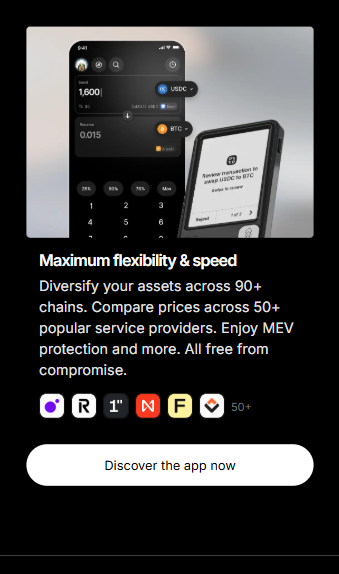
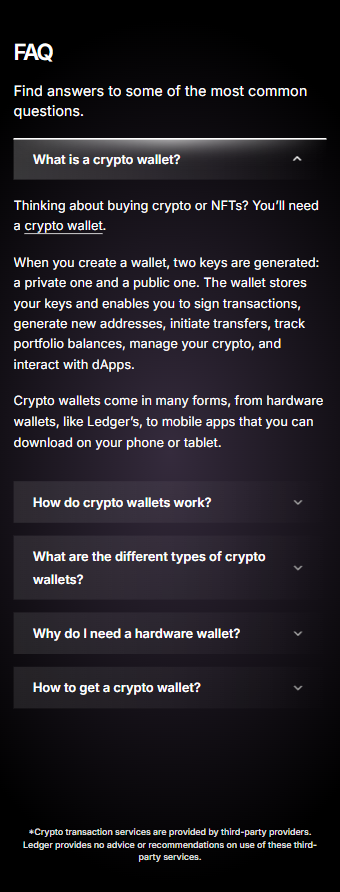
Add cryptocurrencies to your Ledger wallet. Ledger has integrated with leading third-party providers to allow you to buy, trade, stake, and manage cryptocurrencies through the Ledger Wallet app. Your cryptocurrencies will be securely transferred to your Ledger hardware wallet.
What types of cryptocurrency wallets are available?
There are several types of cryptocurrency wallets, each with its own advantages and disadvantages."Hot" wallets are connected to the internet and are generally convenient to use, but are also vulnerable to online attacks. Examples include web, mobile, and desktop wallets. "Cold" wallets store private keys offline and protect them from online threats. Examples include paper and hardware wallets.Wallets can also be divided into custodial and non-custodial, depending on who owns the private keys. Storing cryptocurrencies in a custodial wallet means that a third party controls your private keys and therefore your assets. Non-custodial wallets, on the other hand, allow for full ownership and control of your cryptocurrencies.